How Can Christians Know if They're Trapped in Culture Wars?
Spiritual Life


Audio By Carbonatix
By James Spencer, Crosswalk.com

Table of Contents
- How Should Christians Engage a Broken Culture?
- 1. Why Do Christians Sometimes Treat Culture as the Enemy?
- 2. Why the End Does Not Justify the Means for Christians
- 3. What Happens When Christians Stop Seeing People as Image Bearers?
- 4. Can Political Power Fix What Is Spiritually Broken?
- How Can Christians Be Faithful Without Becoming Worldly?
- What Does Faithful Christian Engagement Actually Look Like?
- Frequently Asked Questions About Christians and Culture
- For Further Reading
We live in a disorienting and disoriented world offering an endless stream of new ways to ignore, distort, marginalize, or deny God and diminish human dignity. Thankfully, Christians are not responsible for fixing the world, but for living faithfully in a broken world; only God can fix. We are not a people called to be effective at policing morality but faithful in proclaiming the gospel. Even though we aren’t responsible for fixing the world doesn’t mean we are not to practice a “pure and undefiled” religion by visiting “orphans and widows in their affliction” and remaining “unstained from the world” (James 1:27). Instead, it means we obey God even when doing so leaves the world broken.
This article explores why Christians must resist the temptation to fix the world by using the world’s logic, pressure, and power. Instead of believing the end justifies the means, believers are called to pursue faithfulness, protect their witness, and proclaim the gospel in ways that reflect the kingdom of God rather than the instincts of a broken culture.
How Should Christians Engage a Broken Culture?
Christians should engage a broken culture with truth, compassion, holiness, and gospel clarity, but not with the assumption that political pressure, outrage, or worldly tactics can bring lasting transformation. The church is called to be faithful in a broken world, not to act as though its mission is to control every outcome. That does not mean indifference. It means our methods must match our message and reflect what the Bible says about influencing culture.
1. Why Do Christians Sometimes Treat Culture as the Enemy?
Consider, for instance, Moses. A pharaoh “who did not know Joseph” has ascended to Egypt’s throne. Not understanding the blessings God provided to Egypt through Joseph, this new pharaoh saw Israel as a threat because they were “too many and too mighty” for the Egyptians. He seeks (unsuccessfully) to keep the Israelites from being fruitful and multiplying (Exodus 1:8-22). He wages a futile campaign against God, whose blessing he cannot curtail.
Israel is being oppressed. So, when Moses sees an Egyptian beating a Hebrew, “he [Moses] struck down the Egyptian and hid him in the sand” (Exodus 2:12). Moses can no longer stand by as the Egyptians abuse the Israelites. He has legitimate concerns and acts on them. Yet, driven to solve the problem “right now,” Moses quickly realizes he is no match for the pharaoh. Moses was correct that the Israelites' situation needed to change.
Moses and Pharaoh make similar mistakes: they seek to sustain or remake the world through their own efforts and in ways they deem justified by the ends they seek to accomplish. The pharaoh is doing what pharaohs do: sustaining his kingdom. The Hebrews are an asset the pharaoh seeks to retain and a threat he seeks to minimize. In his mind, the means he uses to secure his empire are justified by the end he seeks to accomplish. Securing the future of his kingdom may well require Israel to suffer. Because he did not witness God’s blessing of those who blessed Joseph (Genesis 12:3), he made what seems to be a logical choice from the standpoint of a ruler with limited wisdom, possibilities, and power.
While Moses’s actions may be more altruistic, our sympathy for his cause should not blind us to the similarities between his actions and those of the pharaoh. Assessing the Israelites' situation, Moses takes matters into his own hands. At that point, Moses may not have known that he needed to wait on God. While it seems that he had some knowledge of the stories of his ancestors (Exodus 3:6), Moses needed to learn what it means to be part of the Lord’s kingdom. Not knowing how to obey, Moses reacts to the crisis at hand in a way that makes sense to him. He stops the Egyptian from harming one of his fellow Hebrews. By striking down the Egyptian, Moses confirms the pharaoh’s fears about an Israelite uprising.
When various crises threaten what we or others value, or when we become too enamored of our own comfort, we will not bear good fruit (Matthew 13:22; Luke 8:14).
2. Why the End Does Not Justify the Means for Christians
Despite our belief in God’s Word, the worries and riches of the world can cause us to adopt an end-justifies-the-means mentality or other detrimental patterns of thought. For instance, theologian Mark Noll has suggested that American evangelicals have adopted “three barriers to productive thinking” and, I would add, acting, including “an immediatism that insists on action, decision, and even perfection right now; a populism that confuses winning supporters with mastering actually existing situations; and an anti-traditionalism that privileges current judgments on biblical, theological, and ethical issues (however hastily formed) over insight from the past (however hard-won and carefully stated).”
Immediatism conditions us not to wait on the Lord. Populism confuses consensus and celebrity with wisdom. Anti-traditionalism assumes we are isolated in the present by diminishing the past. These barriers put us at risk of becoming people with “itching ears” who “accumulate for themselves teachers to suit their own passions and will turn from listening to the truth and wander off into myths” (2 Timothy 4:3-4). We may have what seem to be legitimate “passions.” We may want to eliminate poverty, protect our children from immorality, or install leaders who promise to end one atrocity or another.
These passions, however legitimate, can be misdirected when we become willing to pursue our passions, even if it diminishes the power of our individual and collective testimony. When our ears itch for the authorization to do what we feel needs to be done to fix the world, we risk adopting the “myth” that we can keep evil sufficiently at bay without making it difficult (if not impossible) to be “all things to all people that by all means” we “might save some” (1 Corinthians 9:22).
3. What Happens When Christians Stop Seeing People as Image Bearers?
For instance, consider the call to ban Target after its release of a Pride line from Abpallen, a company selling occult-themed LGBTQ+ clothing featuring Satan. Christians were right to be disturbed by the explicit references to the occult and Satan. Christians should not support the LGBTQ+ movement or the popularization of Satan. We do not call evil good and good evil (Isaiah 5:20). Banning Target was an appropriate response. Still, I’m concerned about the means used to coordinate that Christian response. It doesn’t feel like a response emerging from discipleship or through the counsel of local pastors, but from outraged rallying cries from various social media influencers. The means used to advocate against Target were, at times, polarizing and political.
Instead of cultivating compassion for the lost, the message seemed to take on an “us versus them” tone, more intent on demonization than on salvation. As such, the results achieved by pressuring Target may be detrimental to our ability to be all things to all people, so that we might save some. My concern is that Christians avoid adopting an end-justifies-the-means mentality. Regarding the Target backlash, James Lasher notes, “There is power in a moral, unified movement among citizens when they stand up to immoral corporations and say, ‘Enough.’” I agree. Yet, Christians need to consider the implications of wielding that power and ask how Christians should respond to moral decline without losing their witness.
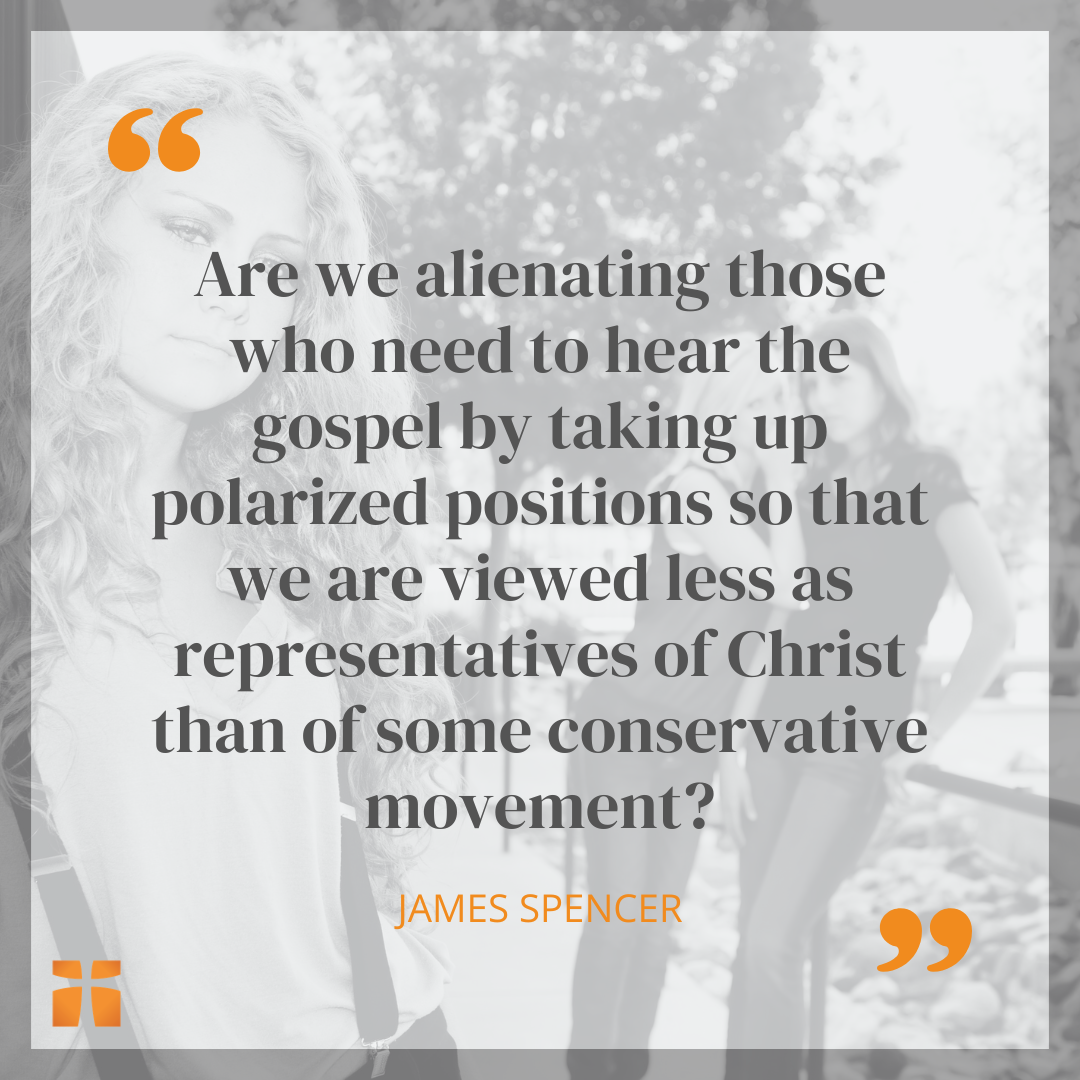
Are we, like Moses, responding to legitimate concerns in ways that promote the world’s logic over God’s wisdom? Are we succumbing to immediatism so that waiting on God becomes a fool’s errand? Have we become so enthralled with populism that we have diminished the significance of saving a single soul? Are we alienating those who need to hear the gospel by taking up polarized positions so that we are viewed less as representatives of Christ than of some conservative movement?
4. Can Political Power Fix What Is Spiritually Broken?
I won’t pretend to have the answers to all of these questions, but I think we need to be asking them. I am not offering a final word on these matters but encouraging Christians to think beyond the immediate, the popular, and the present to ensure we are not diminishing our ability to save some to ensure the world is only broken in ways we are willing to tolerate (if not enjoy). We would do well to consider how biblical patterns might inform our contemporary actions. For instance, we don’t see Paul calling the church to publicly condemn the markets where meat sacrificed to idols was sold.
Instead, he calls believers to be discerning by considering how their actions may have a detrimental effect on the conscience of others (1 Corinthians 8:1-13) or express solidarity with “demons” (10:14-22). If the early church had organized public protests against pagan worship centers, Paul’s discussion with the “very religious” people of Athens who were worshipping “the unknown god” (Acts 17:22-23) would surely have been more challenging. Yet, Paul does not call the church to end pagan worship by “banning” the Athenians or exerting social or economic pressure, even if such pressures would have been effective. Our worst-case scenario is winning on the world’s terms. We aren’t to be better at employing the world’s tactics but at surviving to proclaim the gospel in word and deed (Matthew 10:16-23). We must recognize God’s active presence and the possibilities it provides.
How Can Christians Be Faithful Without Becoming Worldly?
Christians can be faithful without becoming worldly by refusing panic, rejecting manipulative tactics, and remembering that people are not the enemy. Faithful engagement means telling the truth without cruelty, resisting evil without mirroring it, and protecting the church’s witness even when outrage feels more effective. It also means learning to wait on God, listening to wise counsel, and asking not only whether an action works, but whether it reflects the character of Christ.
What Does Faithful Christian Engagement Actually Look Like?
We have more options than those who do not know God. Obeying God won’t guarantee we get to address every issue we want. Thankfully, the church is not called to fix the world but to be faithful in a broken world so that God may be glorified as He uses us to point to Him.
Faithfulness is not an excuse to ignore the world or to surrender every battle. It is a way of living that shapes our engagement with the world and defines the weapons we use as we “wrestle” not “against flesh and blood, but against the rulers, against the authorities, against the cosmic powers over this present darkness, against the spiritual forces of evil in the heavenly places” (Ephesians 6:12).
Frequently Asked Questions About Christians and Culture
- Are Christians supposed to fix the world?
Christians are not called to fix the world in the ultimate sense. They are called to live faithfully in a broken world, proclaim the gospel, and obey God even when the world remains broken. - Should Christians influence culture?
Christians should seek to be faithful within culture, but they must be careful not to adopt worldly tactics that weaken their witness or confuse power with discipleship. - Does the end justify the means for Christians?
No. Even when concerns are legitimate, Christians must ask whether their methods reflect God’s wisdom or simply mirror the world’s logic. - What is the church’s real struggle?
The church’s struggle is not ultimately against flesh and blood, but against spiritual evil. That means Christian engagement must remain spiritual, gospel-centered, and shaped by truth, love, and holiness.
For Further Reading
- How Should Christians Respond When the Culture Pendulum Swings?
- How Do We Navigate Outrage Culture in America in the Digital Age?
- 4 Ways to Engage Secular Culture for Christ
- The Gospel Is Offensive but You Don't Have to Be
- What Is Cultural Relativism?
- How Should Christians Respond When the Culture Pendulum Swings?
- Is It Biblical to Seek to Influence Culture?
- What Is Cultural Relativism?
Photo Credit: ©iStock/Getty Images Plus/skynesher
 James Spencer earned his PhD in Theological Studies from Trinity Evangelical Divinity School and an MA in Biblical Exegesis from Wheaton College. By teaching the Bible and theology, as well as evaluating modern social, cultural, and political trends, James challenges Christians to remember that we don’t set God’s agenda—He sets ours. James has published multiple works, including Serpents and Doves: Christians, Politics and the Art of Bearing Witness, Christian Resistance: Learning to Defy the World and Follow Christ, Useful to God: Eight Lessons from the Life of D. L. Moody, Thinking Christian: Essays on Testimony, Accountability, and the Christian Min, and Trajectories: A Gospel-Centered Introduction to Old Testament Theology. His work calls Christians to an unqualified devotion to the Lord. In addition to serving as president of Useful to God, James is a member of the faculty at Right On Mission and an adjunct instructor at Wheaton College Graduate School. Listen and subscribe to James’s Thinking Christian podcast on Apple Podcasts, Spotify, or Life Audio.